


Date Posted: August 27, 2025
Professional services firms face unique challenges when trying to leverage social media to connect with clients and grow their business.
Unlike consumer brands that chase viral moments or flashy content, these firms must focus on building trust and demonstrating real expertise through their online presence.
Social media marketing for professional services is all about building relationships, demonstrating thought leadership, and establishing credibility—not just driving immediate sales.
Research shows that more professional services firms now use social media networking than email marketing. That makes it a critical part of any modern business strategy.
The approach here really matters. Consumer brands might chase likes and shares, but professional services need to become trusted advisors through their content.
LinkedIn stands out as the top choice for professional services. It enables firms to connect with industry peers and potential clients in a business-focused environment.
Key Takeaways
- Professional services social media marketing leans into relationship building and expertise, not viral content
- LinkedIn leads as the main platform for these firms to connect with clients.
- Success means having a strategy focused on trust, authority, and long-term relationships.
What Is Social Media Marketing For Professional Services?

Social media marketing for professional services means using digital platforms to promote law firms, accounting practices, consulting companies, and other service-based businesses.
These firms utilize social channels to establish relationships with potential clients and showcase their expertise.
Professional services include:
- Legal services
- Accounting firms
- Consulting businesses
- Architecture firms
- Engineering companies
- Medical practices
Marketing for professional services isn’t like product marketing. It’s all about trust and credibility—clients choose providers based on expertise and reputation, not just price.
Social media provides these businesses with a platform to share their knowledge through engaging content. They post articles, case studies, and insights to prove their skills.
Key platforms include:
- LinkedIn – Best for B2B connections
- Facebook – Local community engagement
- Twitter – Industry news and updates
- YouTube – Educational videos and presentations
Research indicates that professional services firms utilize social media networking more frequently than email marketing.
They utilize social platforms to promote thought leadership, often in conjunction with speaking at conferences.
Social media platforms offer new opportunities for networking, showcasing work, and sharing expertise. Firms can connect with prospects before those prospects even know they need help.
Instead of chasing quick sales, the strategy focuses on building long-term relationships. Providers become trusted advisors by consistently sharing valuable content.
Law, Finance, Healthcare, Consulting Industries
Professional services firms face special challenges when marketing on social media. Each industry must adhere to strict rules regarding client privacy and professional conduct.
Law Firms need careful content strategies. Law firms with strategic social media content receive 142% more consultation requests than those that post randomly. LinkedIn is most effective in enhancing professional credibility and demonstrating expertise.
Finance Companies have to walk the line between compliance and trust building. They can share market insights and educational content, but can’t give direct investment advice. Visuals help explain tricky financial concepts.
Healthcare Organizations deal with the toughest privacy rules. HIPAA makes patient stories and case studies tricky, so educational health content and team spotlights get better engagement.
Consulting Firms get more freedom in their approach. They can share case studies, thought leadership, and industry insights openly. These firms often utilize multiple platforms to target diverse client groups.
| Industry | Best Platform | Content Focus | Key Challenge |
| Law | Legal expertise | Client confidentiality | |
| Finance | LinkedIn, Twitter | Market insights | Regulatory compliance |
| Healthcare | Facebook, LinkedIn | Health education | HIPAA requirements |
| Consulting | LinkedIn, Twitter | Thought leadership | Demonstrating ROI |
Consistent posting and real engagement help all professional services firms connect with their audiences.
Why Social Media Matters For Professional Services In 2025
Social media has become a necessity for professional services firms seeking to expand. Recent research indicates that more professional services firms utilize social media networking than email marketing.
Professional services companies need a strong online presence to compete. Social platforms help them reach potential clients where they already spend time online.
Brand awareness goes up when firms post valuable content regularly. Consistent posting allows them to demonstrate their expertise and establish trust.
Social media marketing is just as important in 2025 for professional services. The platforms give direct access to decision-makers and business leaders.
Key benefits for professional services include:
- Direct client communication
- Thought leadership opportunities
- Referral generation
- Competitive edge
Digital marketing for professional services takes a strategic mindset. Firms use social media to promote thought leadership about as often as they speak at conferences.
Social platforms help professional services firms build real relationships. They stay connected to current clients and attract new ones with targeted content.
Investing time and effort in social media yields better visibility and increased client engagement. Firms that ignore these channels risk falling behind those that utilize them effectively.
Choosing The Best Platforms For Professional Services
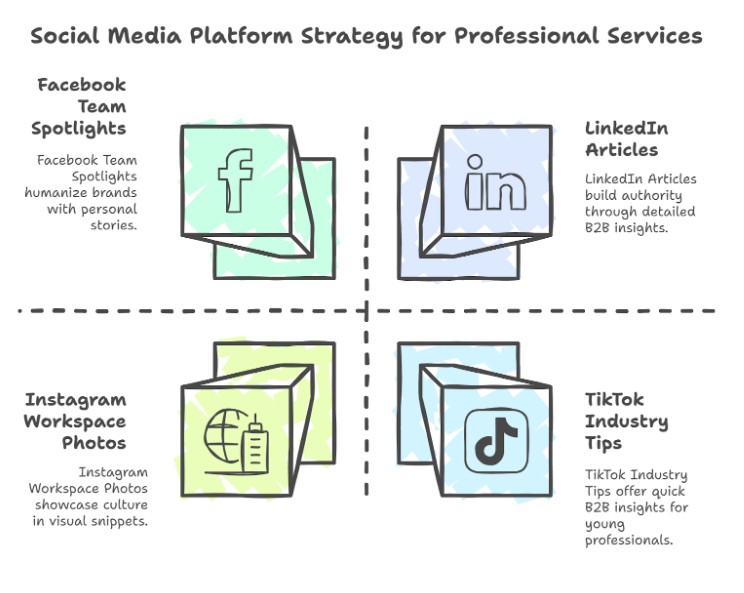
Professional service firms require platforms that facilitate the establishment of trust and demonstrate expertise.
LinkedIn excels for B2B networking, while Facebook and Instagram facilitate community connections, and video platforms enable firms to share knowledge through educational content.
LinkedIn For B2B & Thought Leadership
LinkedIn stands out as the primary platform for marketing professional services. It connects directly with decision-makers and industry leaders who hire consulting, legal, accounting, and other professional firms.
Business owners and executives use LinkedIn to research service providers. They want to see thought leadership content that proves expertise and strong problem-solving skills.
Content that performs well on LinkedIn includes:
- Industry analysis and market insights
- Case studies without revealing client details
- Professional commentary on business trends
- Company updates and team achievements
LinkedIn’s publishing feature lets professionals share long-form articles. These articles build authority and help clients understand a firm’s approach to tough problems.
LinkedIn offers targeting options for specific industries and job titles. Professional services firms benefit most from LinkedIn, X, and YouTube because of their B2B focus.
People engage by commenting and joining industry discussions. It’s smart to join relevant groups and engage in conversations that showcase your knowledge.
Facebook/Instagram For Community Building
Facebook and Instagram help professional services firms build local community presence. These platforms work especially well for firms serving regional markets or tight-knit communities.
Facebook lets firms share behind-the-scenes content that humanizes their brand. Photos of team events, office culture, and community involvement create personal connections with potential clients.
Effective Facebook content includes:
- Team spotlights and employee achievements
- Community event participation
- Educational workshops and seminars
- Client testimonials and success stories
Instagram’s visual style highlights the company culture and values. Firms can showcase their workspace, team meetings, and community work through photos and stories.
Both platforms make direct communication easy through comments and messages. This helps smaller firms stand out by offering personal service.
Local businesses benefit significantly from Facebook’s community groups and event features. Firms can host virtual seminars or networking events to show their expertise.
YouTube/TikTok For Educational Content
Video platforms enable professional service firms to break down complex topics in a simple manner. YouTube and TikTok reach people who prefer learning through visual content, such as watching videos, instead of reading.
YouTube’s long-form videos are ideal for providing detailed explanations of regulations, process walkthroughs, and FAQ sessions. These videos appear in Google searches and continue to attract potential clients over time.
Successful video content topics include:
- Step-by-step process explanations
- Common client questions and answers
- Industry update summaries
- Software or tool demonstrations
TikTok’s shorter videos work for quick tips and industry insights. More young professionals and business owners are turning to TikTok for professional content.
Video content builds trust by putting faces to expertise. Clients can get a feel for your communication style and personality before reaching out.
Both platforms make it easy to repurpose content across multiple videos. A single client question can spark a series of educational clips that draw in similar prospects.
Sticking to a regular posting schedule and consistent branding helps build audience recognition over time.
Your knowledge deserves a wider audience. With 800Commerce’s social media solutions, professional service firms attract trust and clients. Book your free strategy session now.
Content Strategies That Build Trust And Authority
Professional service firms require content that demonstrates expertise and fosters client confidence.
Content marketing strategies for professional services focus on valuable, targeted content that sets firms apart from competitors.
Case Studies & Client Stories
Case studies give professional service firms powerful proof points. They highlight real results and showcase expertise in action.
Structure for Effective Case Studies:
- Challenge or problem faced
- Solution provided
- Specific results achieved
- Client testimonial or quote
These stories work because they address common client concerns. Potential clients can see how the firm handles situations that look like their own.
Client stories should focus on measurable outcomes. Numbers and data points lend credibility and trustworthiness to the story.
Firms can share case studies across LinkedIn, their website, and email newsletters. This content works well in all those places.
It’s essential to obtain client permission and safeguard sensitive information. Anonymous case studies can still be practical if you include sufficient detail about the process and results.
Expert Tips, How-To Videos
How-to content helps professional service providers look like helpful experts. This builds trust before clients even reach out.
Popular Video Topics Include:
- Step-by-step processes
- Common mistake prevention
- Industry best practices
- Tool demonstrations
Videos tend to perform well on social media. They receive more engagement than text-only posts and allow professionals to showcase their personalities.
Short videos—typically two to three minutes long—work better than longer ones. Focusing on one clear topic per video keeps things simple and useful.
The best content solves real problems that target clients face. That creates instant value and demonstrates the firm’s understanding of client needs.
Consistency matters more than perfection here. Posting helpful content regularly does more for your reputation than the occasional high-production video.
Industry Updates & Thought Leadership Posts
Thought leadership content demonstrates that professionals stay current with industry developments.
Building authority through content marketing involves establishing a deep understanding of trends and regulations.
Effective Thought Leadership Topics:
- New regulations or law changes
- Industry trend analysis
- Technology impacts
- Market predictions
These posts work best when you add your own perspective. Just sharing news doesn’t suffice—insights make the content truly valuable.
Timing matters with industry updates. Professionals who comment quickly on changes position themselves as informed experts.
Connect industry changes to client impact. That shows practical thinking and helps clients see why it matters to them.
Posting industry insights regularly keeps you visible to your network. It also attracts new connections who want to stay informed.
Paid Social Advertising For Professional Services
Professional service firms can utilize LinkedIn’s targeting capabilities to directly reach decision-makers.
Facebook’s retargeting tools help turn website visitors into clients. Local firms can run geo-targeted campaigns to focus ad spend on their service areas.
LinkedIn Lead Generation Campaigns
LinkedIn offers the most precise targeting for B2B professional services. Law firms, consultants, and accounting practices can reach specific job titles, industries, and company sizes.
LinkedIn’s lead generation ads capture contact information without requiring users to leave the platform. Pre-filled forms boost conversion rates by 20-30% compared to sending people to external landing pages.
Key targeting options include:
- Job function and seniority level
- Company size and industry
- Professional interests and skills
- Member groups and connections
Sponsored InMail campaigns deliver personalized messages right to LinkedIn inboxes. When targeted well, these messages get 10-15% open rates.
LinkedIn’s Matched Audiences feature allows firms to upload client lists for lookalike targeting. That helps identify similar prospects who likely require professional services.
Facebook Retargeting For Service Inquiries
Facebook’s pixel tracks website visitors and shows them relevant ads across Facebook and Instagram. This keeps professional services top of mind when prospects are close to making a hiring decision.
Retargeting audiences to create:
- Website visitors from the last 30 days
- People who viewed specific service pages
- Users who started but didn’t complete contact forms
- Past clients for referral campaigns
Custom audiences based on engagement data let firms focus on warm prospects. Video viewers and blog readers usually show more intent than cold traffic.
Dynamic ads automatically display relevant services to each prospect. A law firm can display different practice areas based on which pages a visitor has viewed.
Facebook’s lookalike audiences help you find new prospects similar to your best clients. Upload email lists to expand your reach to more qualified people.
Geo-Targeted Ads For Local Firms
Location-based targeting enables professional services to reach clients within their designated service area. Local law firms, accountants, and consultants all need clients who can meet in person.
Geographic targeting options:
- Radius around office locations
- Specific zip codes or cities
- Exclude areas outside service zones
- Target people traveling to the area
Paid social campaigns can target high-value local clients using income and property value filters. Wealth management firms often use these filters to find qualified prospects.
Local professional services do well with dayparting ads during business hours. Estate planning attorneys, for example, tend to see better results from weekday campaigns when people are researching financial services.
Mobile location targeting reaches prospects near competitor offices or relevant venues. Tax preparers can target people near banks during tax season for maximum impact.
Measuring ROI From Social Media Marketing
Professional services firms require accurate data to justify social media spending and adjust their marketing budgets. Metrics like lead quality and client acquisition costs matter way more than follower counts or likes.
Engagement Rates vs Vanity Metrics
Engagement rates show how actively prospects interact with your content. Comments, shares, and real conversations signal genuine interest from potential clients.
Meaningful Engagement Metrics:
- Comment-to-post ratio
- Share rate on industry insights
- Click-through rates to service pages
- Profile visits from posts
Vanity metrics, such as follower count and total likes, don’t tell you much about business value. A law firm with 10,000 followers but zero inquiries isn’t getting real results.
Track engagement that leads to business conversations. For instance, a consulting firm’s LinkedIn post that generates five qualified prospect messages is far more effective than a generic post with 100 likes.
Measuring social media ROI means focusing on metrics tied to revenue goals. Engagement quality always beats quantity.
Lead Quality, Conversions, And Client Acquisition Cost
Lead quality is the real test of social media success for professional services. High-value prospects who need your expertise give you better returns than random inquiries.
Key Conversion Metrics:
- Cost per qualified lead
- Lead-to-client conversion rates
- Average client value from social channels
- Time from social interaction to sale
Client acquisition cost through social media needs to compare well to other marketing channels. If an accounting firm spends $200 per social media lead versus $500 per Google Ads lead, that’s a clear win.
Conversion rates shift based on platform and service type. LinkedIn often generates higher-quality B2B leads for consulting firms, while Meta platforms may be more effective for consumer-facing legal services.
Professional services usually have longer sales cycles. A LinkedIn prospect may not convert for months, but that doesn’t mean they’re not valuable in the long run.
Tools: LinkedIn Analytics, Meta Insights, GA4
LinkedIn Analytics gives you detailed B2B engagement data for professional services. You can check out audience demographics, post performance, and visitor insights tailored to business decision-makers.
LinkedIn Analytics Features:
- Visitor job titles and industries
- Content performance by topic
- Follower growth and engagement trends
- Message response rates
Meta Insights tracks Facebook and Instagram performance with clear demographic breakdowns. If you’re in professional services, you can spot which content types spark the most inquiries and profile visits.
GA4 links social media traffic directly to website conversions and contact form submissions. Analytics tools enable the tracking of the customer journey, from a social post to a signed contract.
These platforms enable you to add conversion tracking pixels, allowing you to measure lead quality and client acquisition costs. Professional services firms finally get a real look at ROI across all their social channels.
Conclusion
Professional service firms can no longer afford to treat social media as an afterthought. Social media has become a necessity for businesses seeking growth in today’s competitive market.
Research shows that more professional services firms use social media networking than email marketing. That trend says a lot about how effective these platforms have become for business development.
Social media lets firms transform their brand experience. It also helps individual practitioners stand out as industry experts and reach wider audiences.
To succeed, you need user-friendly websites, targeted marketing campaigns, and a steady stream of high-quality content. Time is money for professional service providers, so streamlined strategies really matter.
When firms launch structured social media efforts, they experience improved customer engagement and increased reach. These platforms make it easy to highlight expertise with case studies and client testimonials.
Stop blending in. Stand out as the go-to expert in your industry. 800Commerce delivers ROI-driven social media marketing for professionals. Schedule your consultation today.
Frequently Asked Questions
Why should professional service firms use social media?
Social media builds brand trust, attracts qualified leads, and keeps clients engaged between service interactions.
Which social media platform works best for professional services?
LinkedIn is most effective for B2B firms, while Facebook and Instagram excel for community engagement and local visibility.
Can social media marketing actually generate clients?
Yes. Over 70% of clients research firms online before hiring, and strong social content directly influences decision-making (LinkedIn, 2024).
How often should a professional service firm post?
Aim for 2–4 high-quality posts weekly, focusing on client education, case studies, and thought leadership.
What type of content works best for professional services?
Educational content, such as tips, case results, client testimonials, and industry insights, performs best in establishing authority and trust.
Is paid advertising worth it for professional services?
Yes. Targeted ads on LinkedIn and Facebook can deliver high-quality leads at a lower cost compared to traditional advertising.
How do you measure ROI from social media in professional services?
Track qualified leads, conversions, and engagement metrics tied directly to new consultations or client retention.