


Date Posted: August 27, 2025
Local businesses are up against more competition than ever in 2025. Effective local SEO strategies have become a lifeline.
Google continues to get smarter, and people search differently now—via voice commands, mobile browsing, and more. Old tricks? They’re no longer cutting it.
To win at local SEO in 2025, you need to focus on Google Business Profile optimization, real customer reviews, mobile-first websites, and AI tools that actually help you track what’s working.
If you adapt, you’ll probably see more foot traffic, calls, and conversions. Ignore the changes, and you’ll get left behind.
Local SEO isn’t just about keywords or dumping your info in directories anymore. Smart business owners recognize that user experience is more important than relying on generic SEO tactics.
Genuine community engagement and truly local content now matter more than ever.
Key Takeaways
- Google Business Profile optimization remains the most significant factor in local search visibility.
- Customer reviews and mobile-friendly sites shape rankings and keep users engaged.
- AI tools and hyperlocal content help you track what’s working and connect with customers nearby.
What Is Local SEO in 2025?

Local SEO is now significantly more advanced. AI shapes search results, the “local pack” can make or break a business, and search engines actually get what people mean when they search for something nearby.
AI Overview Integration
Google’s AI Overviews show up in local search results for a lot of queries these days. These summaries gather information from all over the web and provide answers to local questions immediately.
If you want your business to show up there, you need content that’s clear, factual, and answers the questions people really ask—like your hours, services, and location.
Some smart tactics:
- Write FAQ-style content with straight answers
- Use structured data markup
- Keep your business info consistent everywhere
Businesses that provide complete and accurate information stand a much better chance of getting featured. The AI hunts for content that actually helps users.
Local Pack Dominance
The local pack refers to the three businesses that appear at the top of search results. In 2025, that spot drives most of the calls and visits.
What gets you in the local pack?
- Google Business Profile completeness
- Lots of good reviews
- Being physically close to the searcher
- Website relevance and authority
If you’re not in the local pack, you’re missing out on most clicks. Two thousand twenty-five local SEO trends prove that getting into the local pack is directly tied to making more money.
Post regularly, upload photos, and always respond to reviews. Treat your Google Business Profile like it’s your main marketing channel—because it kind of is.
Geo-Intent Optimization
Search engines now capture the finer details of location-based searches. Someone looking for a “coffee shop” gets different results than “coffee shop downtown” or “coffee shop near me.”
Modern local SEO means you’ve got to target all those variations. Create content for different neighborhoods, landmarks, and “near me” searches.
How to nail geo-intent:
- Create landing pages for each location
- Work neighborhood names into your content
- Optimize for “near me” terms
- Mention local landmarks in your descriptions
Search algorithms check your location, your search history, and what you’re actually asking for. If your content matches those patterns, you’ll appear more frequently.
Fort Lauderdale business owners — want to rank higher in 2025? 800Commerce builds local SEO strategies that drive calls and customers. Book your free consultation today.
Why Google Business Profile Is Still #1 Strategy
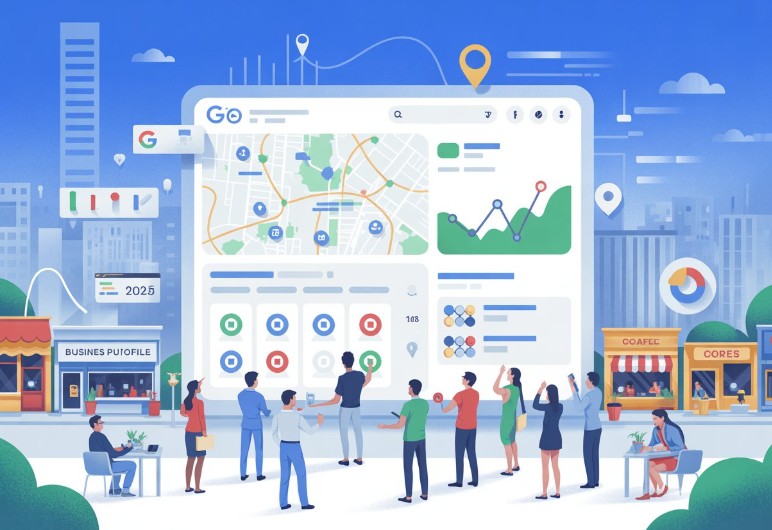
Optimizing your Google Business Profile is the most impactful local SEO step in 2025. 64% of consumers contact a business directly from GBP (BrightLocal, 2024)
Services, Photos, and Q&A Updates Drive Engagement
Update your services, photos, and Q&A sections regularly—these elements really impact local rankings. Your Google Business Profile is basically your digital storefront now.
Service updates tell Google what you actually offer. If you refresh your list monthly, you’ll see improved search visibility. Add seasonal or new services to keep things fresh.
Photo uploads can increase engagement by 42% compared to profiles with outdated or no photos. Good images of your products, team, and space work best. Google loves it when you upload something new each week.
Q&A responses build trust and allow you to incorporate some relevant keywords. Please respond to questions within one day. Common details like hours or pricing also help future customers.
Consistency shows both customers and Google you’re active and reliable. Regular updates prove to search algorithms that you care about your business.
New AI-Powered Profile Features
AI now helps Google Business Profiles show up differently to different users. These new features are smarter and more personalized than ever.
AI-generated summaries build your business description from reviews and your profile info. Google’s AI tries to highlight what makes you unique. The more complete your profile, the better this works.
Smart photo suggestions tell you which images to feature. The AI identifies which photos receive the most clicks, then prioritizes them in search results.
Automated Google Posts suggest updates based on your business type and local events. Even if you forget to post, AI keeps things moving. AI-driven results and proximity-based algorithms continue to evolve in 2025.
The AI learns from your customers’ behavior and displays the most relevant information first. Over time, your profile becomes more effective at attracting the right people.
How Reviews Impact Local Rankings in 2025
Reviews are one of the most significant factors in local search today. What your customers actually say—and how you reply—can push you up or down in results.
87% of consumers read reviews before choosing a business (BrightLocal, 2024)
Keywords in Reviews Influence Rankings
Google scans the actual words in reviews to figure out what you do. If your customers mention “gluten-free pasta” or “outdoor seating,” you’ll rank higher for those searches.
Reviews matter so much because they’re fresh and relevant. They send strong signals to Google about your business.
Encourage your customers to mention what they actually used. That way, the keywords come across naturally—not forced.
Best keywords to get in reviews:
- Specific service names
- Product categories
- Neighborhoods or location details
- Problem-solving phrases
The number and quality of Google reviews you have make a big difference. Detailed, keyword-rich reviews work way better than just star ratings.
Responding Boosts Visibility
When you reply to reviews, you create more content for Google to find. Each response is an opportunity to incorporate keywords and demonstrate your engagement.
Google views businesses that respond as more trustworthy and engaged. That can bump you up in rankings and make customers more likely to choose you.
Don’t stress about writing essays—just reply quickly, ideally within a day or two.
Good review replies usually:
- Thank the customer by name
- Mention the service they used
- Work in relevant local keywords
- Handle issues politely
Reviews build trust and can make or break a customer’s decision. People almost always read your replies before reaching out or visiting.
Voice Search and “Near Me” Optimization
Voice search is a whole different animal. People talk to their phones like they’re talking to a friend, so your SEO needs to catch up. Optimizing for voice search means focusing on how people actually speak and what they need right now.
Natural Language and Conversational Keywords
Voice searches sound like actual questions, not just keywords. Instead of typing “pizza restaurant,” someone says, “Where can I find a good pizza place nearby?”
So, you should optimize for question-based searches like:
- Who, what, where, when, why, and how
- Full sentences and casual phrases
- Local add-ons like “near me” or “in my area”
Your content should reflect the way people actually speak. That means longer, more conversational keyword phrases.
Work in natural language variations for your local keywords. A bakery might go for “bakery that’s open early” or “fresh bread near me”—not just “bakery downtown.”
Answer the actual questions people ask. FAQ sections are ideal for capturing voice search traffic, especially when you use genuine, natural questions.
“Open Now” and “Near Me” Relevance
Approximately 75% of voice searches include location-specific terms, such as “near me.” That makes location optimization a big deal for businesses.
People using voice search want instant answers. Typically, they’re looking for businesses that are currently open.
Key optimization areas include:
- Accurate business hours in Google Business Profile
- Real-time updates for holiday hours
- “Open now” status visibility
- Location-specific landing pages
Google Business Profile really matters for voice search results. Keeping your profile up to date with your hours, contact information, and location will increase your visibility.
Try to optimize for urgent searches. Phrases like “open late,” “24 hours,” or “available now” attract people who need solutions on the spot.
Mobile-friendly websites load faster for users who use voice search. Quick load times help your business appear when someone needs answers quickly.
Your Google Business Profile is your new storefront. Let 800Commerce optimize it with proven 2025 local SEO tactics. Schedule a free strategy session now.
Mobile-First, Fast Websites for Local SEO
Google’s mobile-first indexing means your site’s mobile performance affects your local search rankings.
Core Web Vitals scores play a role in map pack visibility, and schema markup tells search engines where you actually are.
Core Web Vitals Impact Map Pack Rankings
Google uses Core Web Vitals as ranking factors for local results. These metrics examine loading speed, the stability of your page, and the speed at which users can interact.
Largest Contentful Paint (LCP) should load within 2.5 seconds. If your page loads slowly on mobile, local customers are likely to leave.
First Input Delay (FID) tracks how fast users can interact with your site. You want this under 100 milliseconds for a good experience.
Cumulative Layout Shift (CLS) measures the extent to which elements on a page shift position as it loads. Keep this value below 0.1 so that buttons and text stay in place.
Mobile optimization for local SEO is all about fast load times and responsive design. Bad Core Web Vitals scores can push your business off the map pack.
Test your website with Google PageSpeed Insights. Compress images, speed up your server, and reduce heavy JavaScript to boost your scores.
Schema Markup for NAP
The local business schema helps search engines determine your Name, Address, and Phone number. This structured data gives you a better chance of appearing in rich results.
LocalBusiness schema should include these required fields:
- Business name
- Street address
- City, state, zip code
- Phone number
- Business hours
NAP consistency between your schema markup and Google Business Profile is super important. If the info doesn’t match, search engines get confused and your rankings drop.
Add schema markup right to your site’s HTML or use JSON-LD. If applicable, add extra details such as price range, payment options, or service areas.
Proper schema markup makes your business stand out in search results. People see your hours, phone number, and ratings right in the snippet.
Hyperlocal Content & Landing Pages
Hyperlocal content strategies zoom in on specific neighborhoods and landmarks. By creating targeted landing pages and event-focused posts, businesses can actually connect with people nearby.
City and Neighborhood Landing Pages
Business owners should make separate landing pages for every city or neighborhood they serve. Each page needs unique content—mention local landmarks, street names, and details that demonstrate your knowledge of the area.
Include your business name, address, and phone number on every page. Talk about the local problems you solve for folks in that spot.
Key elements for neighborhood pages:
- Local keyword phrases in titles and headings
- Photos from that specific location
- Customer reviews from nearby residents
- Area-specific service information
For example, a plumber might have pages for “Emergency Plumbing in Downtown Springfield” and “Water Heater Repair in Maple Heights.” Mention local streets, shopping centers, or schools—whatever locals recognize.
These focused pages help you rank for searches like “dentist near Riverside Park” or “pizza delivery to Oak Street.”
Event-Based and Community-Focused Blogs
Local events are goldmines for fresh content that actually matters to your neighbors. Write about festivals, farmers’ markets, school events, or seasonal happenings.
Preview upcoming events or recap what just happened. It shows you care about more than just making a sale.
| Content Type | Examples | SEO Benefits |
| Event Previews | “Best Food at Spring Festival” | Timely local searches |
| Event Recaps | “Highlights from School Fundraiser” | Community engagement |
| Seasonal Posts | “Winter Safety Tips for Main Street” | Year-round relevance |
A fitness studio could blog about “Preparing for the Annual 5K Charity Run” or “Healthy Eating During Holiday Festivals.” These topics tie your services to what people already care about.
Community engagement increases when businesses comment on local issues or celebrate neighborhood successes. It’s not just about SEO—it actually helps build relationships and gets people talking about you.
AI Tools & Data Tracking in Local SEO
Modern AI tools have changed how businesses track and improve local search. These platforms dig into user behavior and automate stuff like citation management, which used to be a headache.
Google Search Console AI Insights
Google Search Console now offers AI-powered analytics that highlight local search patterns. The platform shows which local queries drive traffic and where your business performs best geographically.
You can track local keyword performance across different cities or neighborhoods. These insights reveal seasonal trends and new chances for location-specific content.
The tool identifies technical issues affecting your local rankings. You may notice missing structured data or inconsistent NAP information.
AI-driven local SEO tactics enable businesses to refine their strategies based on actual search data. Smart alerts notify you if your rankings drop or a competitor starts appearing more frequently in your area.
Heatmaps and Click Tracking
AI-powered heatmaps show exactly where people click on your local business pages. You can see which contact info grabs the most attention and which service pages lead to phone calls.
Click tracking reveals how customers move from search to actually reaching out. You’ll determine whether visitors prefer clicking on your phone number, address, or a contact form.
Heat mapping reveals:
- Most viewed contact information
- Popular service categories
- Navigation patterns on location pages
- Mobile vs desktop user behavior
This kind of data helps you redesign your pages for better results. Move your phone number or other important info to spots where people actually click.
AI Content Audits for Local Intent
AI SEO tools for 2025 now analyze content to determine if it accurately aligns with local search intent. These platforms scan your pages and spot gaps in location-specific info.
Content audits look for local keywords and geographic modifiers. The tools may prompt you to add neighborhood names or local landmarks to enhance relevance.
AI systems also monitor local citations across various directories. They identify inconsistent business information that can harm your local rankings and suggest fixes.
Citation management becomes significantly less painful with AI tools that track mentions across hundreds of databases. Moz Local and similar platforms use machine learning to spot duplicate listings and new citation opportunities.
The technology flags missing citations in key directories. It even checks up on competitor citations, so you can find new listing spots you might’ve overlooked.
Conclusion
Local SEO in 2025 isn’t about gaming algorithms — it’s about building trust and visibility where your customers live, search, and shop.
From optimizing your Google Business Profile to earning authentic reviews, creating hyperlocal content, and preparing for voice search, these strategies ensure your business stays competitive in Fort Lauderdale and beyond.
By focusing on speed, relevance, and credibility, you’ll not only rank higher but also win more customers who are ready to take action.
Stop losing leads to competitors. With 800Commerce’s local SEO expertise, your business gets found first in Fort Lauderdale searches. Claim your free visibility audit today.
Frequently Asked Questions
What are the best local SEO strategies in 2025?
The most effective local SEO strategies encompass Google Business Profile optimization, review management, hyperlocal content creation, mobile site speed optimization, and voice search optimization.
Why is Google Business Profile important for local SEO?
Google Business Profile is the top ranking factor in 2025, helping businesses appear in map packs and driving direct calls and visits.
How do online reviews affect local SEO rankings?
Reviews influence both trust and rankings. Positive reviews with keywords boost visibility, while responding to reviews improves engagement signals to Google.
Is voice search critical for local SEO in 2025?
Yes. With more than half of consumers using voice assistants on a weekly basis, optimizing for conversational and “near me” queries is essential.
How long does it take to see local SEO results?
Businesses typically experience improvements within 3–6 months, with consistent optimization delivering stronger rankings and a higher ROI over 12 months.
Do small businesses need local SEO in 2025?
Yes. Local SEO helps small businesses compete by targeting nearby customers who are actively searching for services, often delivering a higher ROI than paid ads.
What tools help track local SEO performance?
Google Search Console, Google Analytics, and GBP Insights track traffic, calls, and clicks, while BrightLocal and Semrush monitor rankings and citations.