


In the current digital landscape, maintaining a robust online presence, digital marketing, and online reputation management are essential for any business seeking to achieve success. As consumers increasingly rely on the internet for information and services, the significance of online visibility cannot be overstated. This article examines the benefits of establishing a strong digital footprint, which includes enhancing brand visibility, credibility, and digital footprint, as well as essential strategies for improvement. Readers will discover the key elements that contribute to a successful online presence and e-branding and learn how to measure their digital impact effectively. Engaging with this content will enable businesses to unlock their potential within the online landscape.
The Importance of Online Presence for Businesses
In the current competitive landscape, establishing a robust online presence is essential for businesses seeking to enhance their brand visibility, social media engagement, and engage effectively with their target audience.
As the digital marketing environment continues to evolve, companies that prioritize their online reputation and visibility stand to gain significantly through increased website traffic, improved search rankings, heightened customer trust, and positive online reviews.
The proliferation of online platforms and social media provides businesses with unprecedented opportunities for audience engagement and to connect with their audiences and cultivate customer loyalty.
Recognizing the significance of these components is vital for facilitating strategic growth and ensuring sustained success in an increasingly digital world and optimizing digital visibility.
Understanding the Impact of the Digital Age
The digital age has fundamentally transformed the manner in which businesses engage with their customers, profoundly influencing consumer behavior, engagement metrics, and expectations in an interconnected world. As an increasing number of consumers turn to online platforms for information and make purchasing decisions, it is imperative for businesses to adapt to these changes in order to thrive.
Understanding this shift is critical for the development of effective digital strategies that focus on audience targeting, engagement metrics, and conversion optimization.
As consumers devote more time to various digital channels, businesses must acknowledge the necessity of establishing a robust online presence that aligns with these evolving habits. For example, personalized marketing strategies, informed by data analytics, can significantly enhance the connection between a brand and its potential customers.
Furthermore, leveraging social media platforms provides companies with the opportunity to engage directly with their audience, thereby fostering brand loyalty and trust.
As market dynamics continue to evolve, the adoption of flexible digital frameworks and strategic planning will give the power to businesses to respond promptly to consumer feedback and emerging trends, ensuring their competitiveness and relevance in this rapidly changing landscape.
Impact of Online Presence on Business Growth
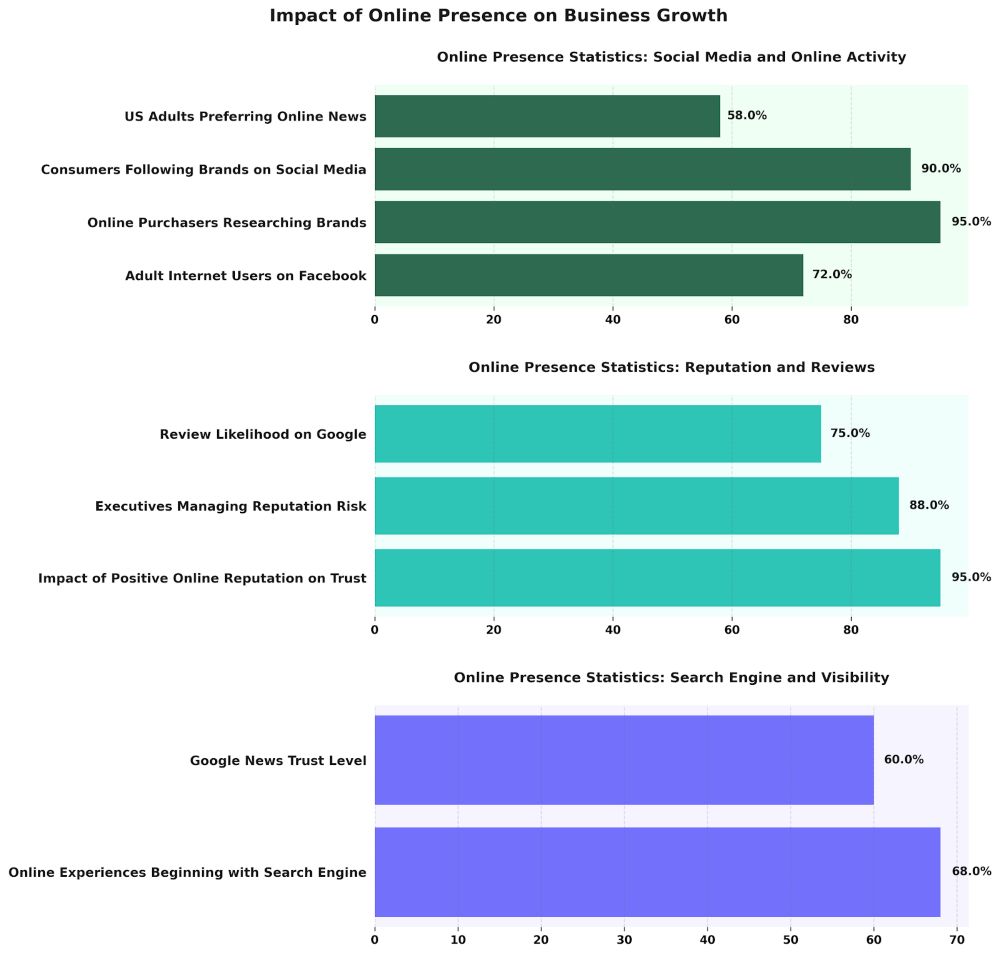
The Impact of Online Presence on Business Growth highlights the critical role that digital platforms and strategies play in modern business success. As businesses navigate the digital landscape, understanding key statistics about online presence, analytics, and market trends can guide them in optimizing their strategies for business growth and engagement metrics.
Online Presence Statistics shed light on how consumers interact with businesses online. 72% of adult internet users are on Facebook, indicating a significant opportunity for businesses to engage with a broad demographic. As 95% of online purchasers research brands, it is crucial for businesses to maintain an informative and appealing online presence with an effective content strategy. Additionally, 90% of consumers follow brands on social media, suggesting that active social media engagement can enhance brand loyalty, visibility, and online interaction. With 58% of U.S. adults preferring online news, businesses should also consider digital advertising and partnerships with online news outlets.
Reputation and Reviews are vital in building trust and credibility. 95% believe a positive online reputation impacts trust, emphasizing the importance of managing online perceptions, trust signals, and online advertising. Furthermore, 88% of executives actively manage reputation risk, highlighting its significance in strategic planning. The likelihood of consumers leaving reviews on platforms like Google is 75%, presenting opportunities for businesses to leverage positive reviews to attract new customers, address negative feedback proactively, and utilize user-generated content.
Search Engine and Visibility data shows how crucial search engines are in the consumer journey and search algorithms, with 68% of online experiences starting with a search engine. This underscores the importance of search engine optimization (SEO) in driving digital visibility and traffic. Moreover, 60% of users trust Google News, pointing to the effectiveness of using Google’s platform for sharing news and updates.
In conclusion, the Impact of Online Presence on Business Growth demonstrates that maintaining a robust online presence through social media, managing reputation, conversion rates, and optimizing search engine visibility are essential strategies for modern businesses aiming to expand and thrive in the digital age.
Benefits of Establishing a Strong Online Presence
Establishing a robust online presence provides numerous advantages for businesses, including heightened brand awareness, improved customer engagement, e-commerce, and increased online sales.
By implementing a comprehensive digital strategy that integrates various marketing channels, businesses can attract and retain customers more effectively.
Furthermore, a well-structured online presence can enhance lead generation and conversion rates through the strategic application of social media, content marketing, search engine optimization techniques, and influencer marketing.
Increased Visibility and Reach
One of the primary advantages of a robust online presence is the enhanced visibility and reach it affords businesses, enabling them to connect with a wider audience.
By implementing SEO best practices and online marketing strategies, organizations can effectively drive organic traffic to their websites and improve their search rankings on search engine results pages, thereby maximizing their potential customer base.
This increase in visibility not only attracts more visitors but also encourages greater engagement and online networking, as potential customers are more inclined to interact with brands that rank prominently in search results.
Utilizing targeted keywords pertinent to their industry allows businesses to align their offerings with the specific needs of their audience, informed by audience insights and web analytics. When this strategy is combined with optimized content and social media marketing initiatives, it significantly bolsters a brand’s reputation and credibility.
Ultimately, as customer traffic increases, so too does the potential for conversion, thus paving the way for sustainable business growth and long-term success.
Building Trust and Credibility
Building trust and credibility is paramount for any business operating within the digital landscape, as consumers increasingly depend on online reviews and social proof to guide their purchasing decisions. Establishing a positive online reputation can significantly enhance customer trust, which subsequently fosters brand credibility and customer loyalty.
In an environment where information is readily accessible, potential customers often reference reviews provided by previous buyers as a primary source of validation. This collective feedback functions as a contemporary form of word-of-mouth recommendation, shaping perceptions and influencing consumer choices.
Effective reputation management strategies, including timely responses to feedback and addressing concerns, further reinforce trust. Highlighting authentic testimonials and case studies can markedly enhance the perceived reliability of a brand.
Ultimately, when businesses prioritize transparency and invest in their online presence, they not only attract new customers but also cultivate enduring relationships founded on trust and respect.
Key Elements of a Strong Online Presence
A robust online presence is established through several critical elements, including effective website design, mobile optimization, local search, and a user-friendly experience.
It is essential for businesses to prioritize these components to ensure that their online platforms meet the needs of their target audience and preferences of their target audiences.
Additionally, a well-defined content strategy and the implementation of local SEO practices significantly enhance online visibility, thereby driving user engagement and customer reach and conversions.
Website Design and Functionality

Website design and functionality are essential in attracting visitors and delivering a seamless user experience and information architecture across various devices.
As an increasing number of users access content primarily through smartphones, mobile apps, and tablets, it is imperative for websites to adapt to these platforms. Mobile responsiveness ensures that visuals are clear, navigation is intuitive, and loading times are minimized, all of which directly influence user satisfaction.
The implementation of website optimization, web analytics, and performance metrics further enhances performance, enabling features such as faster load speeds and efficient layout adjustments.
Collectively, these elements not only enhance visitor engagement but also increase the likelihood of conversions, thereby fostering brand loyalty, customer retention, and attracting a broader audience.
Social Media Presence
A robust social media presence is essential for businesses seeking to connect with their target audience and enhance engagement metrics through responsive design and brand differentiation. By employing effective audience targeting strategies, businesses can utilize social media platforms to foster digital communication and cultivate a loyal customer base.
This approach not only enables brands to reach individuals who are more likely to engage with their content but also permits businesses to analyze audience behavior and preferences using competitor analysis. Through the use of tools that track engagement metrics such as likes, shares, and comments, businesses can refine their messaging and strategies to resonate more effectively with their audience.
By creating tailored content that addresses their followers’ interests, the potential for increased brand visibility is significantly enhanced. Consequently, this cultivates customer loyalty, as satisfied consumers are more likely to advocate for the brand, share their experiences, and contribute positively to its online reputation.
Strategies for Improving Online Presence
Implementing effective strategies to enhance online presence is crucial for businesses aiming to improve brand visibility and customer engagement.
Essential strategies include:
- Search engine optimization (SEO)
- Online advertising
- Content marketing
These initiatives should be supported by comprehensive analytics to measure success and refine digital strategies accordingly.
Search Engine Optimization (SEO)
Search Engine Optimization (SEO) serves as a fundamental strategy for enhancing a business’s online presence, with a primary focus on improving search rankings through effective keyword research and the development of domain authority.
By optimizing content for organic search, businesses can attract relevant traffic and enhance their overall visibility in search engine results.
A comprehensive understanding of keyword research and brand positioning is essential, as it entails identifying the specific terms and phrases that potential customers utilize to locate products or services online. Additionally, enhancing domain authority plays a crucial role in establishing credibility and trustworthiness in the eyes of search engines.
Businesses should also consider implementing various strategies to enhance their digital identity, such as:
- Optimizing on-page elements
- Improving site speed
- Leveraging high-quality backlinks
to strengthen their SEO efforts.
Ultimately, a holistic approach to SEO not only drives traffic but also increases the likelihood that the engaged audience will convert into loyal customers.
Online Advertising

Online advertising serves as a powerful instrument for businesses seeking to enhance their visibility and improve conversion rates through targeted marketing initiatives. By utilizing paid search campaigns and remarketing strategies, organizations can effectively leverage audience insights to optimize their advertising efforts.
Employing data-driven techniques enables companies not only to attract potential customers but also to maintain engagement with previous visitors through strategic remarketing and call-to-action (CTA) initiatives. This method allows for the customization of messaging and offers based on user behavior, significantly increasing the likelihood of conversion.
The capacity to track performance metrics in real-time facilitates dynamic adjustments to marketing strategies, ensuring ongoing relevance and effectiveness. As organizations explore audience demographics and preferences more deeply, they can refine their targeting efforts, resulting in improved return on investment (ROI) and better alignment with market demands.
Measuring the Success of Your Online Presence
Measuring the success of an online presence is essential for evaluating the effectiveness of digital strategies, including multichannel marketing, and making informed decisions regarding future enhancements.
By employing analytics to monitor engagement metrics and sources of web traffic, businesses can obtain valuable insights into consumer behavior and identify online trends that influence their performance.
Key Metrics to Track for a Successful Business Strategy
Tracking key metrics is essential for evaluating the digital performance of an online presence and understanding the effectiveness of various strategies. Important metrics to monitor include engagement metrics, conversion rates, and website traffic, all of which provide valuable insights into audience behavior that can inform future marketing initiatives.
In the constantly evolving digital landscape, it is imperative for businesses to prioritize these metrics to ensure they are effectively reaching and engaging their target audience.
Engagement metrics, such as likes, shares, and comments, serve as indicators of how well content resonates with viewers, while conversion rates reflect the percentage of visitors taking desired actions, such as making a purchase or subscribing to a newsletter, providing valuable customer feedback.
Furthermore, analyzing website traffic and traffic sources can reveal user behavior patterns and identify which channels drive the most visitors. By actively monitoring these elements, businesses can refine their digital strategies, enhance the user experience, and ultimately promote sustainable online growth.
Frequently Asked Questions
Why should your business care about online presence today?
Your business should care about its online presence today because it is essential to reach a wider audience and stay relevant in the digital age. With more and more people turning to the internet for their needs, having a strong online presence is crucial for business success.
How can having an online presence benefit your business?

An online presence can benefit your business by increasing brand awareness, boosting customer engagement and loyalty, driving sales, and enhancing business credibility. It also allows for easier communication with customers, enhances credibility and authority, and provides valuable insights through analytics.
What are some key aspects of building a strong online presence?
To build a strong online presence, your business should have a professional and user-friendly website, regularly create high-quality content, utilize social media platforms effectively, manage online reviews and reputation, and actively engage with your audience.
Do small businesses also need to focus on their online presence?
Yes, even small businesses need to have a strong online presence. In fact, having an online presence can level the playing field for small businesses, allowing them to compete with larger companies and reach a wider audience without hefty marketing budgets.
How can your business establish a strong online presence with limited resources through virtual events and online community engagement?
If your business has limited resources, you can still establish a strong online presence by utilizing free or low-cost tools, such as social media, email marketing, and SEO techniques. You can also reach out to influencers or collaborate with other businesses to expand your reach.
What are some common mistakes businesses make with their omnichannel presence and online networking events?
Some common mistakes businesses make with their online presence include having a poorly designed website, neglecting social media, or having inconsistent branding, not responding to customer reviews or comments, and not utilizing data and analytics to inform their online strategies.